
KPN
KPN
During my graduation internship at KPN, I worked on an internal concept project focused on improving how business customers gain insight into their telecom products across locations.
The project received a final graduation grade of 9.
Because this project is part of an internal and non-public environment, some product details cannot be shared. This case focuses on the design approach and conceptual solution.
During my graduation internship at KPN, I worked on an internal concept project focused on improving how business customers gain insight into their telecom products across locations.
The project received a final graduation grade of 9.
Because this project is part of an internal and non-public environment, some product details cannot be shared. This case focuses on the design approach and conceptual solution.
During my graduation internship at KPN, I worked on an internal concept project focused on improving how business customers gain insight into their telecom products across locations.
The project received a final graduation grade of 9.
Because this project is part of an internal and non-public environment, some product details cannot be shared. This case focuses on the design approach and conceptual solution.
Strategy & Excecution
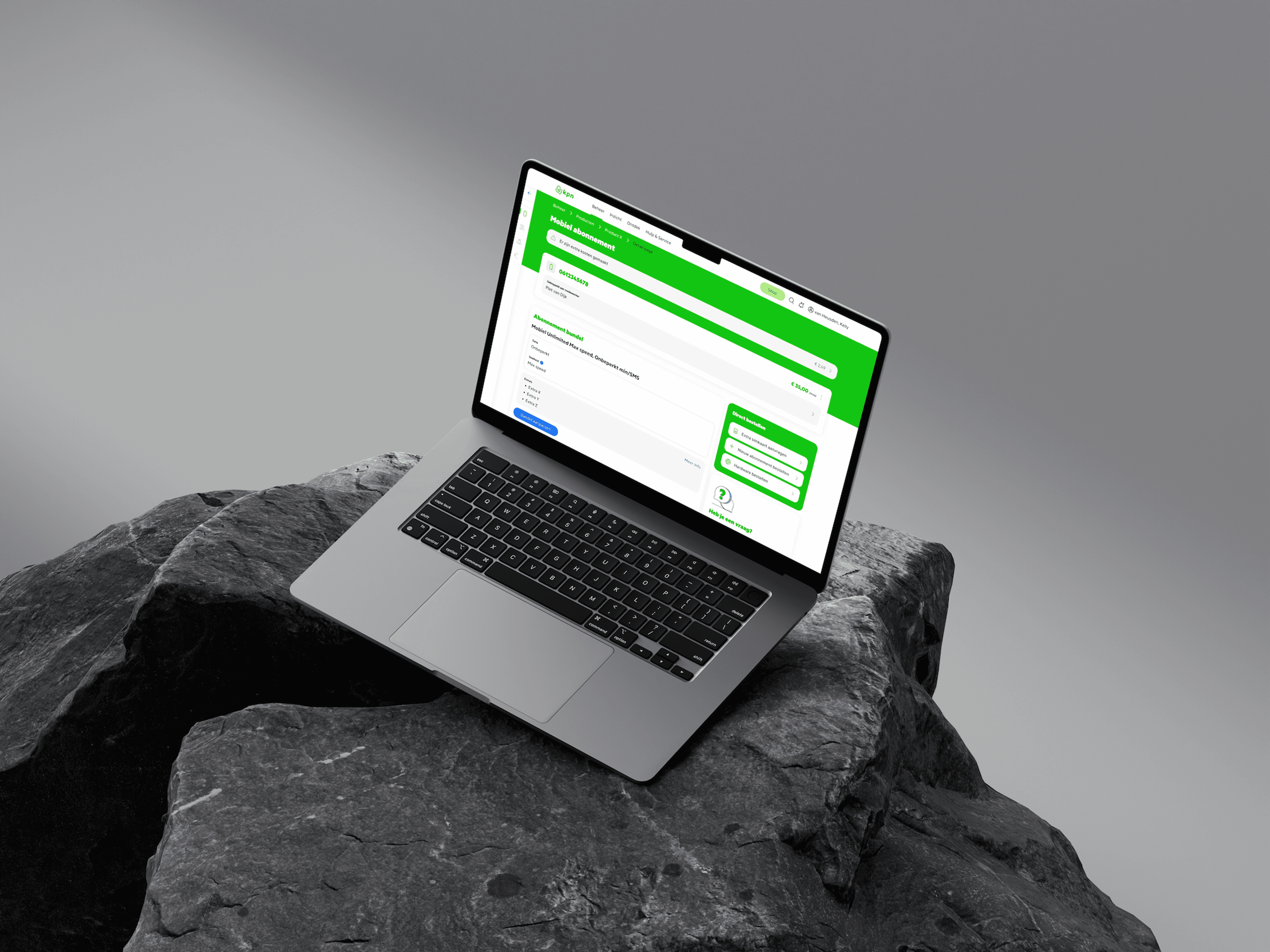
The project lasted six weeks and followed a structured design process. I began with a preparation phase, outlining my planning, methods, and goals. In the research phase, I conducted both desk and field research. Desk research revealed a lack of accessible data but highlighted the seriousness of the issue. After that i went on with interviews, which gave me powerful personal insights into how unsafe many women feel while going out. From there, I moved into the define phase, where I created user profiles, framed the problem, set design principles, and clarified the direction of the solution. In the design phase, I translated my research into a digital prototype. The key features were designed with and tested by the target audience to ensure usability and relevance. After testing, I refined the product based on feedback and delivered the final prototype along with a concept video.
SERVICE
SERVICE
CLIENT
CLIENT
DATE
DATE
UX / UI Design
UX / UI Design
·
·
UX Research
UX Research
·
·
Prototyping
Prototyping
KPN Zakelijke markt
KPN Zakelijke markt
January 2026
January 2026
Problem
Problem
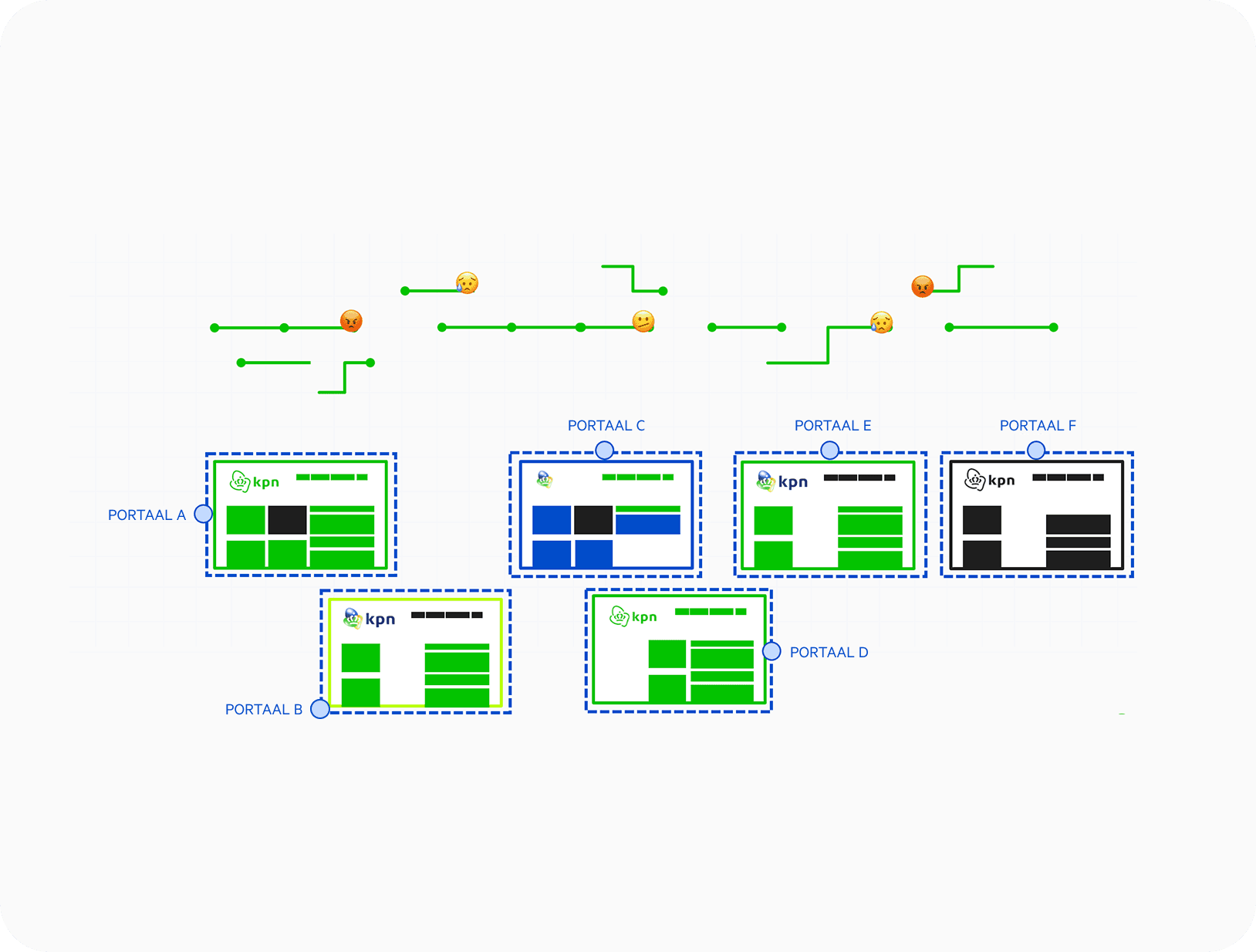
The MijnKPN Zakelijk environment has grown organically over time. As new products and services were added, the system became increasingly fragmented.
For business customers, this resulted in a lack of structure. Information was spread out, products were presented in inconsistent ways, and it became difficult to understand how everything fit together.
As complexity increased, the experience became harder to navigate and harder to scale.
The challenge was not just to improve usability, but to introduce a structure that could support future growth.
The MijnKPN Zakelijk environment has grown organically over time. As new products and services were added, the system became increasingly fragmented.
For business customers, this resulted in a lack of structure. Information was spread out, products were presented in inconsistent ways, and it became difficult to understand how everything fit together.
As complexity increased, the experience became harder to navigate and harder to scale.
The challenge was not just to improve usability, but to introduce a structure that could support future growth.
The MijnKPN Zakelijk environment has grown organically over time. As new products and services were added, the system became increasingly fragmented.
For business customers, this resulted in a lack of structure. Information was spread out, products were presented in inconsistent ways, and it became difficult to understand how everything fit together.
As complexity increased, the experience became harder to navigate and harder to scale.
The challenge was not just to improve usability, but to introduce a structure that could support future growth.

My role
My role
During my graduation internship at KPN, I worked as a UX Designer, focusing on understanding the underlying structure of the system and translating this into a scalable design approach.
I conducted exploratory research to understand how business customers manage their telecom services and mapped the relationships between products and locations. Based on these insights, I defined a scalable information structure and designed interaction concepts and interface components. Prototypes were used to explore and communicate different design directions.
Throughout the project, I combined research, system thinking, and design, while working closely with internal stakeholders and designers to ensure the concept aligned with both user needs and technical possibilities.
During my graduation internship at KPN, I worked as a UX Designer, focusing on understanding the underlying structure of the system and translating this into a scalable design approach.
I conducted exploratory research to understand how business customers manage their telecom services and mapped the relationships between products and locations. Based on these insights, I defined a scalable information structure and designed interaction concepts and interface components. Prototypes were used to explore and communicate different design directions.
Throughout the project, I combined research, system thinking, and design, while working closely with internal stakeholders and designers to ensure the concept aligned with both user needs and technical possibilities.
Strategy
Strategy
Research showed that business customers usually think about telecom The concept was built around this insight by introducing a structure based on two core elements: locations and the products connected to those locations.
By making locations the primary entry point, the system aligns with how users naturally organize their thinking. Products become part of a larger context, rather than isolated elements.
At the same time, the system needed to remain scalable. Whether a company manages a handful of services or a highly complex infrastructure, the structure had to remain clear and consistent.
Research showed that business customers usually think about telecom The concept was built around this insight by introducing a structure based on two core elements: locations and the products connected to those locations.
By making locations the primary entry point, the system aligns with how users naturally organize their thinking. Products become part of a larger context, rather than isolated elements.
At the same time, the system needed to remain scalable. Whether a company manages a handful of services or a highly complex infrastructure, the structure had to remain clear and consistent.
Research showed that business customers usually think about telecom The concept was built around this insight by introducing a structure based on two core elements: locations and the products connected to those locations.
By making locations the primary entry point, the system aligns with how users naturally organize their thinking. Products become part of a larger context, rather than isolated elements.
At the same time, the system needed to remain scalable. Whether a company manages a handful of services or a highly complex infrastructure, the structure had to remain clear and consistent.
Execution
Execution
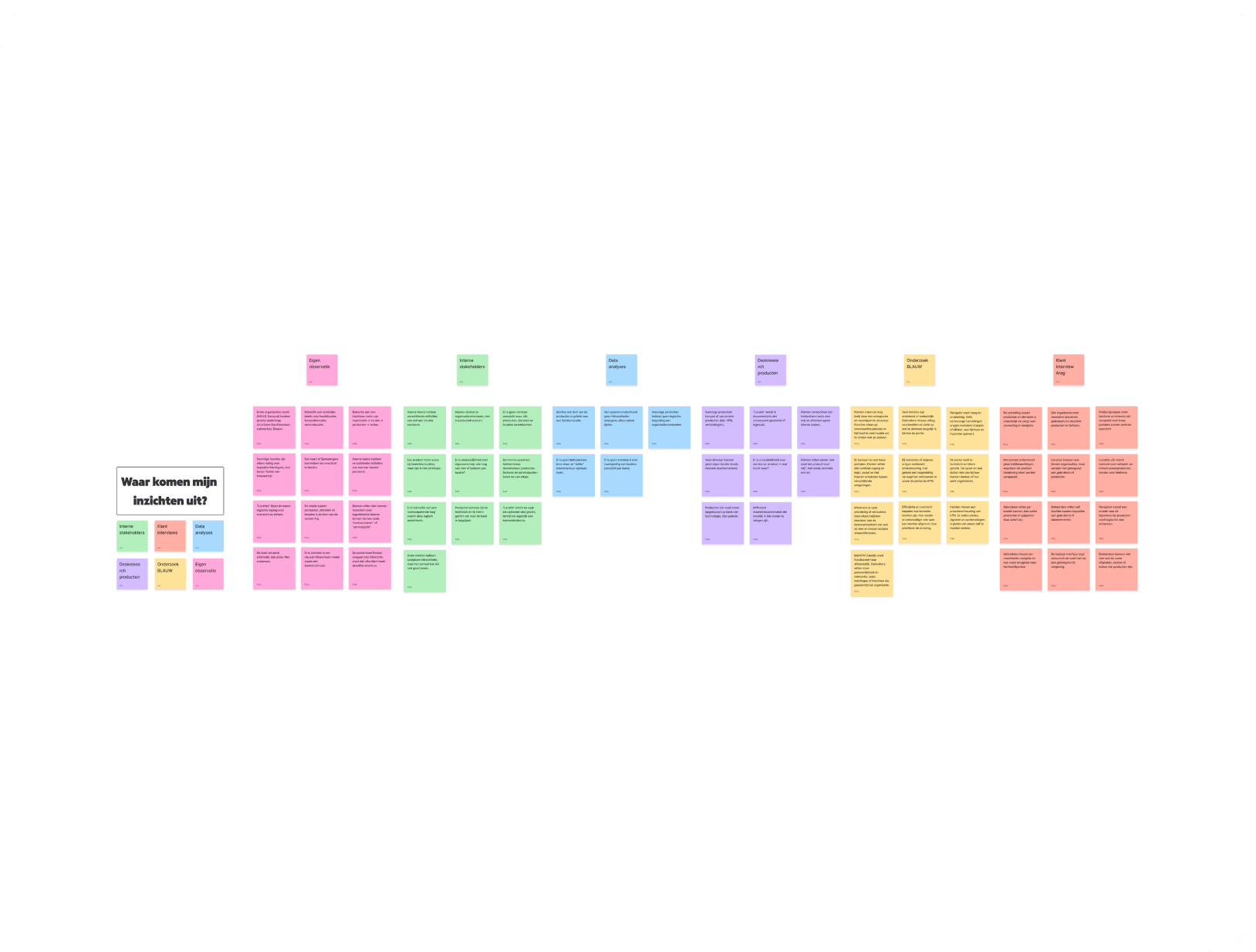
The design process started with exploratory research and discussions with stakeholders to better understand how telecom services are currently organized.
Based on these insights, I explored different ways to structure products and locations. I created information architecture models, wireframes, and interaction concepts to test different approaches.
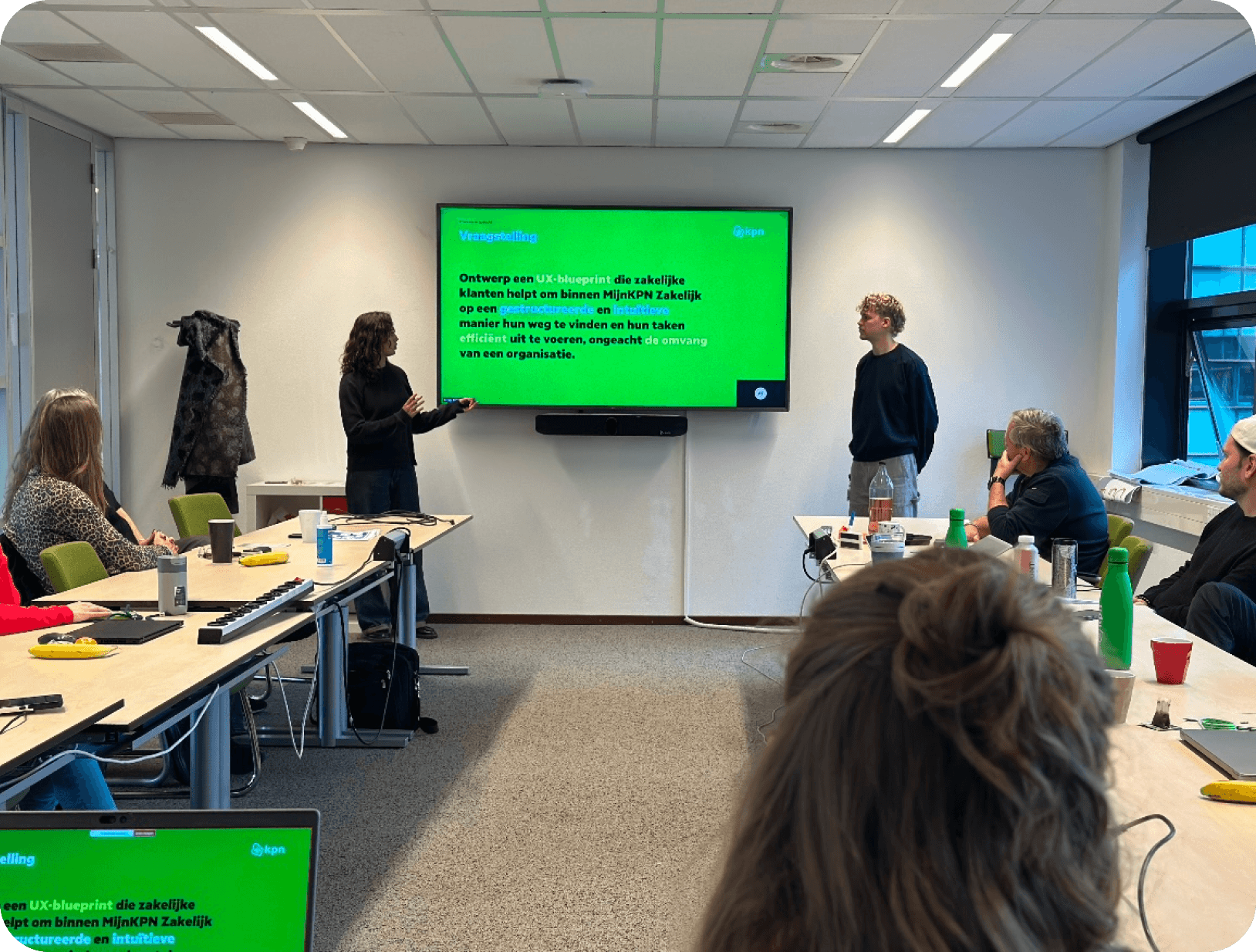
Design sessions and feedback moments helped evaluate which structure worked best for giving users a clear overview and making navigation easy. These ideas were then translated into interface designs that focused on clarity and hierarchy.
Because the project is confidential and not publicly available, only selected elements are shown, focusing on the structure and design principles rather than specific product details.
The design process started with exploratory research and discussions with stakeholders to better understand how telecom services are currently organized.
Based on these insights, I explored different ways to structure products and locations. I created information architecture models, wireframes, and interaction concepts to test different approaches.
Design sessions and feedback moments helped evaluate which structure worked best for giving users a clear overview and making navigation easy. These ideas were then translated into interface designs that focused on clarity and hierarchy.
Because the project is confidential and not publicly available, only selected elements are shown, focusing on the structure and design principles rather than specific product details.
Result
Result
The concept transforms a fragmented telecom environment into a scalable and consistent system.
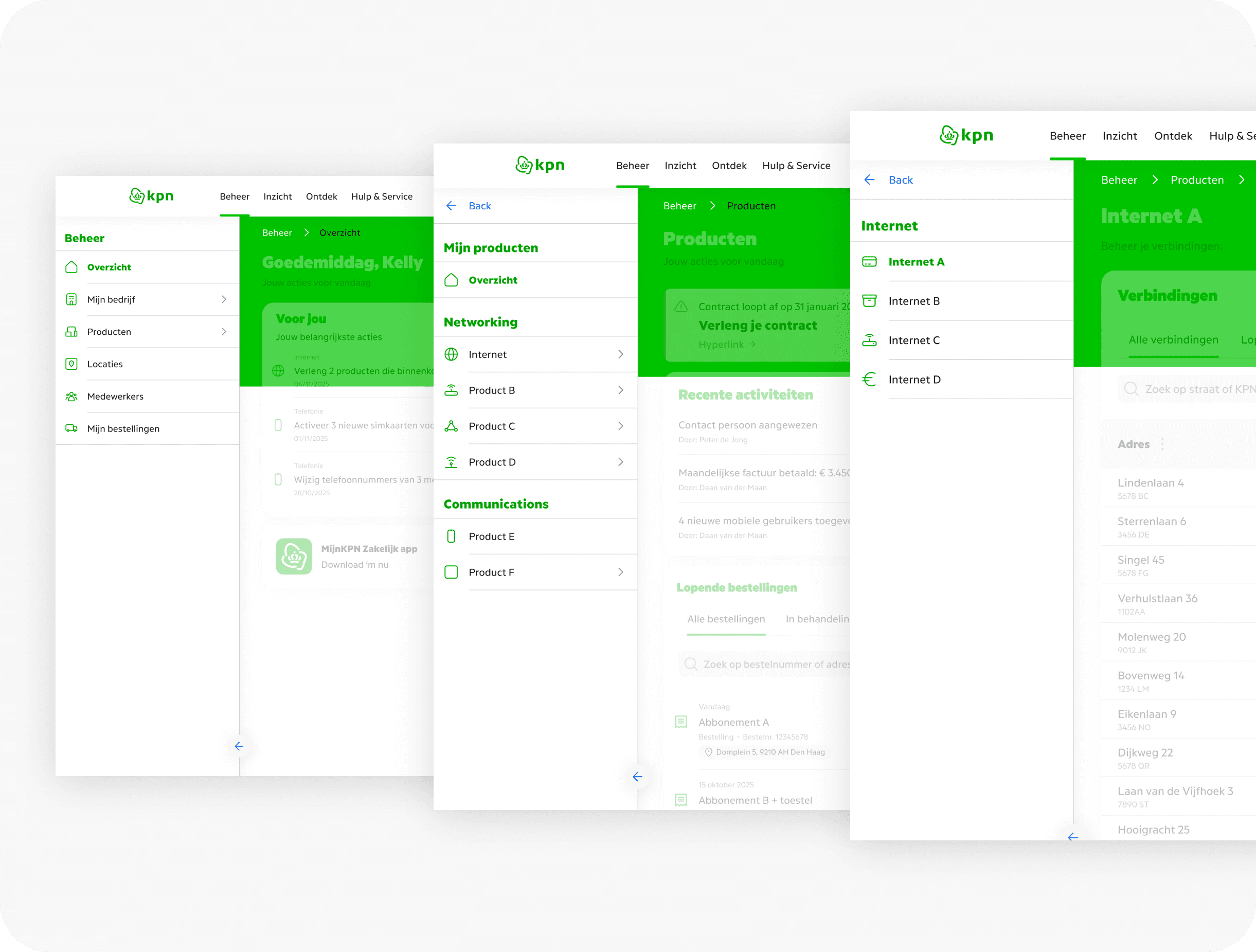
By introducing a modular framework, products are no longer presented as isolated elements but become part of a larger, recognizable structure. Within this system, products are linked to locations, giving users clear context and helping them understand how services are organized across their company.
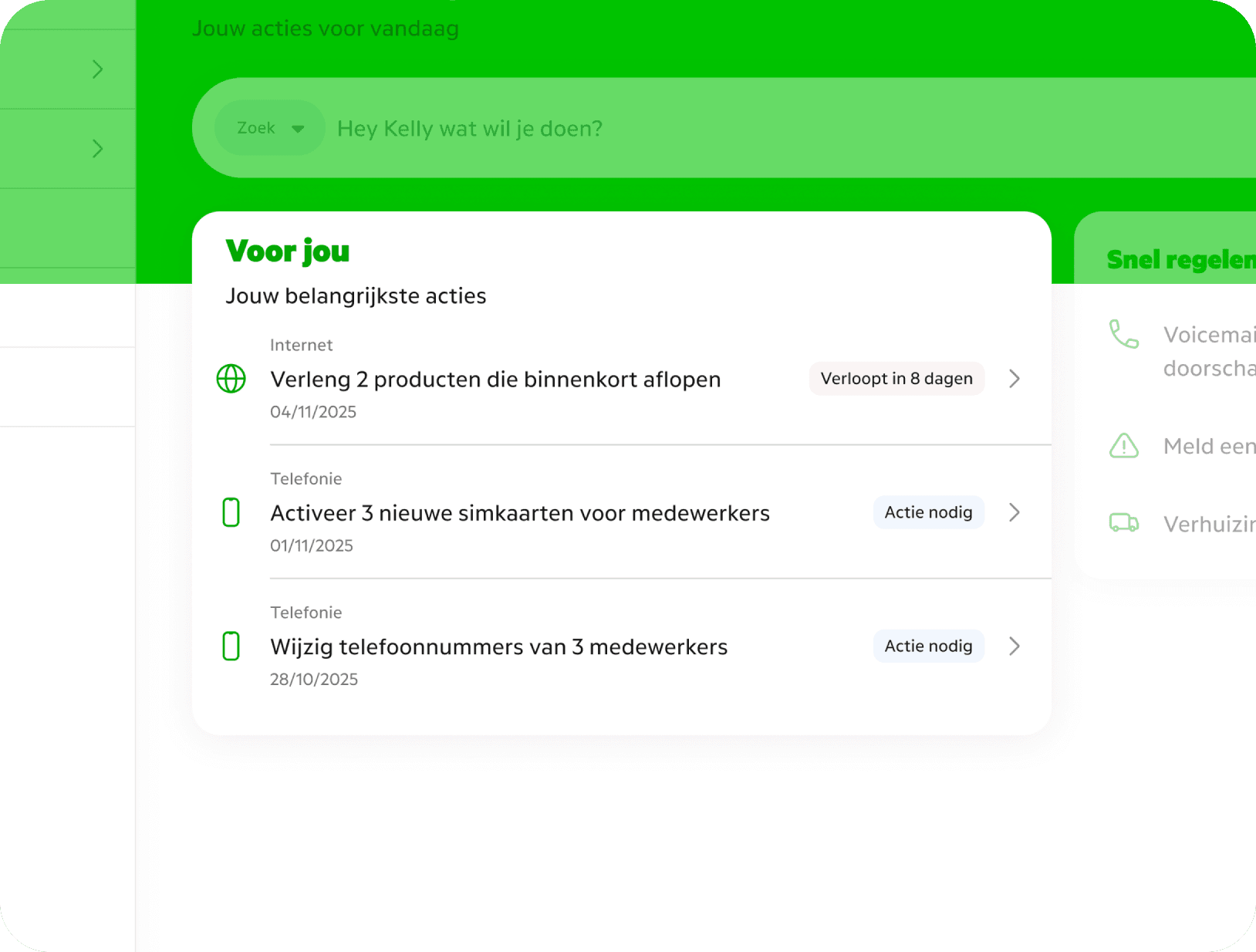
This results in a structured overview where users can quickly see what services exist, where they are used, and whether any action is needed. By bringing everything together in one coherent environment, the concept simplifies complexity, reduces cognitive load, and eliminates the need to navigate across multiple systems.
At the same time, the modular setup ensures the system is future-proof, making it easier to expand and adapt as the organization grows.
The concept transforms a fragmented telecom environment into a scalable and consistent system.
By introducing a modular framework, products are no longer presented as isolated elements but become part of a larger, recognizable structure. Within this system, products are linked to locations, giving users clear context and helping them understand how services are organized across their company.
This results in a structured overview where users can quickly see what services exist, where they are used, and whether any action is needed. By bringing everything together in one coherent environment, the concept simplifies complexity, reduces cognitive load, and eliminates the need to navigate across multiple systems.
At the same time, the modular setup ensures the system is future-proof, making it easier to expand and adapt as the organization grows.
The concept transforms a fragmented telecom environment into a scalable and consistent system.
By introducing a modular framework, products are no longer presented as isolated elements but become part of a larger, recognizable structure. Within this system, products are linked to locations, giving users clear context and helping them understand how services are organized across their company.
This results in a structured overview where users can quickly see what services exist, where they are used, and whether any action is needed. By bringing everything together in one coherent environment, the concept simplifies complexity, reduces cognitive load, and eliminates the need to navigate across multiple systems.
At the same time, the modular setup ensures the system is future-proof, making it easier to expand and adapt as the organization grows.

LETS TALK
Interested?
Contact me!
LETS TALK
Interested?
Contact me!
LETS TALK